
Get Support
-
By: nitin
- 0 Comments
Driving on a sunny day can be uncomfortable when sunlight enters directly through your windshield. The steering wheel gets hot, sunlight creates glare, and the vehicle’s interior can feel warmer than expected.
For many drivers, the windshield is one of the biggest sources of direct sunlight exposure inside the vehicle.
That is why windshield tinting and automotive solar-control films are becoming popular topics among car owners looking to improve driving comfort.
At A5 Tint in Oshawa, we provide professional automotive window tinting services designed to help drivers improve their vehicle’s appearance and comfort.
In this guide, we will explore the benefits of windshield tinting, how automotive window film works, what to consider before installation, and how A5 Tint’s latest offer can provide additional value.
Important: Windshield film must preserve clear driving visibility and comply with Ontario requirements. Always confirm the legality and suitability of the specific film before installation.
What Is Windshield Tinting?

Windshield tinting involves applying a specialised film to a vehicle’s windshield to manage sunlight, heat, and glare.
Automotive window films are available in different technologies, including dyed, carbon, metallic, and ceramic films. Some films are designed primarily for appearance, while others focus on solar heat rejection and UV protection.
A high-quality solar-control film can be designed to reduce the amount of solar energy entering through the glass while maintaining a relatively clear appearance.
This is especially relevant for windshields because drivers need an unobstructed view of the road.
A film’s performance depends on its construction, visible light transmission (VLT), total solar energy rejection (TSER), and compatibility with the vehicle’s existing glass.
For drivers interested in windshield protection, choosing the right film is more important than simply choosing the darkest shade.
6 Important Benefits of Windshield Tinting
1. Helps Reduce Solar Heat
One of the main benefits of automotive window film is its ability to reduce solar heat entering the vehicle.
Sunlight contains different types of energy, including visible light, infrared radiation, and ultraviolet radiation.
Specialised solar-control films are designed to manage how much of this energy passes through the glass.
A high-performance film may help reduce the amount of solar heat entering through the windshield, making the cabin feel more comfortable during sunny conditions.
The exact amount of heat rejection depends on the film, the glass, and the vehicle.
For example, 3M automotive window film specifications report different heat rejection performance levels depending on the film series and testing conditions.
2. Helps Improve Driving Comfort
Direct sunlight can make driving uncomfortable, especially during longer journeys.
When sunlight enters through the windshield, it can create noticeable heat on your face, arms, and dashboard.
A suitable solar-control film can help reduce the intensity of this direct solar exposure.
This may make the driving experience more comfortable during sunny weather and long commutes.
It is important to remember that window film does not replace the vehicle’s air conditioning system. Instead, it can complement the system by helping manage solar heat entering through the glass.
3. Helps Reduce Glare
Sun glare can be distracting when driving toward bright sunlight.
Glare can also occur when sunlight reflects off nearby vehicles, wet roads, or other surfaces.
Certain automotive films are designed to reduce glare by controlling the amount of visible light passing through the glass.
However, windshield visibility is critical for safe driving.
Any film used on a windshield must maintain appropriate visible light transmission and comply with applicable regulations.
A darker windshield is not automatically a better windshield.
4. Provides Additional UV Protection
Ultraviolet radiation is another important consideration for drivers.
Although laminated automotive windshields already provide substantial UV protection, the amount of UVA radiation transmitted can vary depending on the glass.
Specialised automotive window films may provide additional UV protection, depending on the product.
This can be useful for drivers who spend considerable time inside their vehicles.
The Skin Cancer Foundation recommends selecting window films with verified UV protection performance rather than assuming every film offers the same level of protection.
For more information, see the Skin Cancer Foundation’s UV window film guidance.
5. Helps Protect the Vehicle Interior
Sunlight and heat can contribute to the gradual deterioration of interior materials.
Depending on the material and exposure, prolonged sunlight may contribute to fading, discolouration, or deterioration of dashboards, upholstery, and other interior surfaces.
Automotive solar-control films can help reduce exposure to some of the solar energy entering through the glass.
This can support a broader vehicle interior care routine.
However, window film does not eliminate all causes of interior fading. Material quality, temperature, maintenance, and exposure time also matter.
6. Complements Your Full-Car Window Tint Package
Windshield solar-control film can be considered alongside side-window and rear-window tinting.
When selecting a full-car tint package, it is important to understand how each film contributes to comfort, visibility, and the overall appearance of the vehicle.
A professionally selected package can help balance:
- Solar heat rejection.
- UV protection.
- Glare control.
- Interior comfort.
- Clear driving visibility.
- Legal compliance.
The best package is one that delivers the required performance without compromising safe driving visibility.
How Does Windshield Film Reduce Heat?
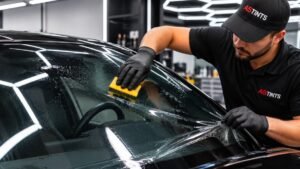
Automotive window films use different technologies to manage solar energy.
Ceramic window films, for example, use specialised ceramic particles designed to help manage infrared radiation and solar energy without necessarily making the glass extremely dark.
The amount of solar energy rejected is commonly measured using Total Solar Energy Rejection (TSER).
A higher TSER value generally means that a greater percentage of total solar energy is rejected by the filmed glass under the specified test conditions.
Other important measurements include:
| Measurement | What It Means |
|---|---|
| VLT | Percentage of visible light transmitted through the glass |
| TSER | Percentage of total solar energy rejected |
| UV rejection | Percentage of ultraviolet radiation rejected |
| IRR | Infrared rejection within a specified wavelength range |
| Glare reduction | Reduction in visible light that can contribute to glare |
These measurements help compare different film technologies.
For accurate comparisons, always check the manufacturer’s specifications for the actual film and glass combination.
Is Windshield Tinting Legal in Ontario?

Before installing any windshield film, Ontario drivers should understand the applicable legal requirements.
Ontario’s Highway Traffic Act prohibits driving with a windshield or window coating that obstructs the driver’s view. It also restricts certain coloured or reflective materials that substantially obscure the vehicle’s interior.
The law also requires the windshield and windows beside the driver to provide a clear view.
You can review the official legislation here:
Ontario Highway Traffic Act — Sections 73 and 74.
Ontario’s vehicle inspection standards also contain requirements concerning windshield light transmission and aftermarket tint.
Because the exact requirements may depend on the vehicle, glass, and type of film, do not assume that every windshield tint product is road-legal.
Before booking a windshield tint installation:
- Ask which film is being recommended.
- Confirm its visible light transmission.
- Check whether the film is suitable for your vehicle.
- Confirm that the installation complies with Ontario requirements.
- Prioritise clear driving visibility over darkness or appearance.
At A5 Tint, customers should confirm the suitability and current legal requirements of any windshield film before installation.
Why Choose Professional Windshield Film Installation?
Windshields have complex curves and large glass surfaces.
Professional installation requires proper preparation, film positioning, and careful application.
An experienced installer can help identify the appropriate film for your vehicle and explain its performance characteristics.
Professional installation also helps reduce the risk of contamination, wrinkles, and visible imperfections.
Before installation, the windshield should be inspected for existing chips, cracks, or damage.
The final result should preserve the driver’s clear view and maintain the vehicle’s normal operation.
A5 Tint’s FREE $100 Door Protection Offer

At A5 Tint, we are making our full-car window tint package even more valuable.
When you book qualifying full-car window tinting, including windshield tint, you can receive:
FREE door cup and door edge protection worth $100.
Here is what the offer includes:
| Service | Offer |
|---|---|
| Full-car window tint | Included in the qualifying package |
| Windshield tint | Included in the qualifying package |
| Door cup protection | FREE |
| Door edge protection | FREE |
| Total value of free door protection | $100 |
Door cup protection helps reduce scratches around exterior door handles.
Door edge protection helps reduce minor paint chips and scuffs along the outer edges of your doors.
Together, these protective films complement your window tint package by addressing two frequently damaged areas of your vehicle.
Contact A5 Tint to confirm package availability, vehicle eligibility, and current offer terms.
Why Choose A5 Tint in Oshawa?
A5 Tint provides automotive window tinting and vehicle protection services in Oshawa, Ontario.
Our services include:
- Automotive window tinting.
- Ceramic window tinting.
- Paint Protection Film (PPF).
- Ceramic coating.
- Vinyl wrapping.
- Buff Polishing
We serve customers across Oshawa and Durham Region, including Whitby, Ajax, Pickering, Bowmanville, Clarington, and surrounding areas.
Whether you drive a daily commuter, family SUV, luxury vehicle, or newly purchased car, our team can help you explore suitable vehicle protection options.
Explore our car window tinting services in Oshawa.
Frequently Asked Questions
Does windshield tint reduce heat?
Certain automotive solar-control films are designed to reduce solar heat entering through the glass. The actual performance depends on the film and vehicle glass.
Does windshield tint block UV rays?
Some automotive window films provide high levels of UV rejection. The amount varies by product, so check the manufacturer’s specifications.
Does windshield tint improve driving comfort?
A suitable solar-control film may help reduce direct solar heat and glare, potentially improving comfort during sunny conditions.
Is a darker windshield tint better?
No. Darker does not necessarily mean better heat rejection. A suitable film should balance solar performance with clear driving visibility and legal compliance.
Is windshield tinting legal in Ontario?
Ontario has requirements concerning windshield visibility and aftermarket tint. Always verify the current requirements and the specific film’s suitability before installation.
What is included in A5 Tint’s $100 offer?
The promotion includes free door cup and door edge protection with a qualifying full-car window tint package that includes windshield tint. Contact A5 Tint to confirm the current terms.
Upgrade Your Driving Comfort with A5 Tint
Driving in bright sunlight can be uncomfortable, particularly when solar heat and glare enter through the windshield.
A suitable automotive solar-control film may help improve comfort, manage solar heat, and provide additional UV protection.
However, windshield visibility and legal compliance should always come first.
At A5 Tint in Oshawa, we help drivers explore professional window tinting and vehicle protection options.
With our latest promotion, you can receive FREE door cup and door edge protection worth $100 when you book qualifying full-car window tinting, including windshield tint.
Improve your vehicle’s comfort and protection with one appointment.
Contact A5 Tint today to discuss your full-car window tint package and claim your FREE $100 door protection offer.
Your vehicle deserves comfort, protection, and professional care.
