
Get Support
-
By: a5tint
- 0 Comments
When people think about window tinting, they usually consider privacy, comfort, or style. However, there’s a growing conversation about the environmental impact of window tinting. Some argue that tinting harms the environment, while others claim it supports sustainability by reducing energy use.
So, what’s the truth? In this blog, we’ll separate myths from facts about the environmental impact of window tinting, while exploring how professional tinting can benefit your car, home, and the planet.
Why Environmental Impact Matters
With climate change and sustainability becoming global priorities, even small choices—like whether or not to tint your windows—can have broader environmental consequences. According to Government of Canada – Climate Change
🚫 Myth 1: Window Tinting Increases Waste and Pollution
Some people believe that tint films contribute significantly to landfill waste and pollution.
✅ Fact: Modern Window Tints Are More Sustainable
Today’s window tinting products are designed with recyclable materials and long lifespans. When installed properly, they can last 10–15 years, reducing the need for frequent replacements. By contrast, untreated windows often require more maintenance or replacement due to UV damage.
(Learn more about sustainable material use at U.S. Environmental Protection Agency – Sustainable Management of Materials
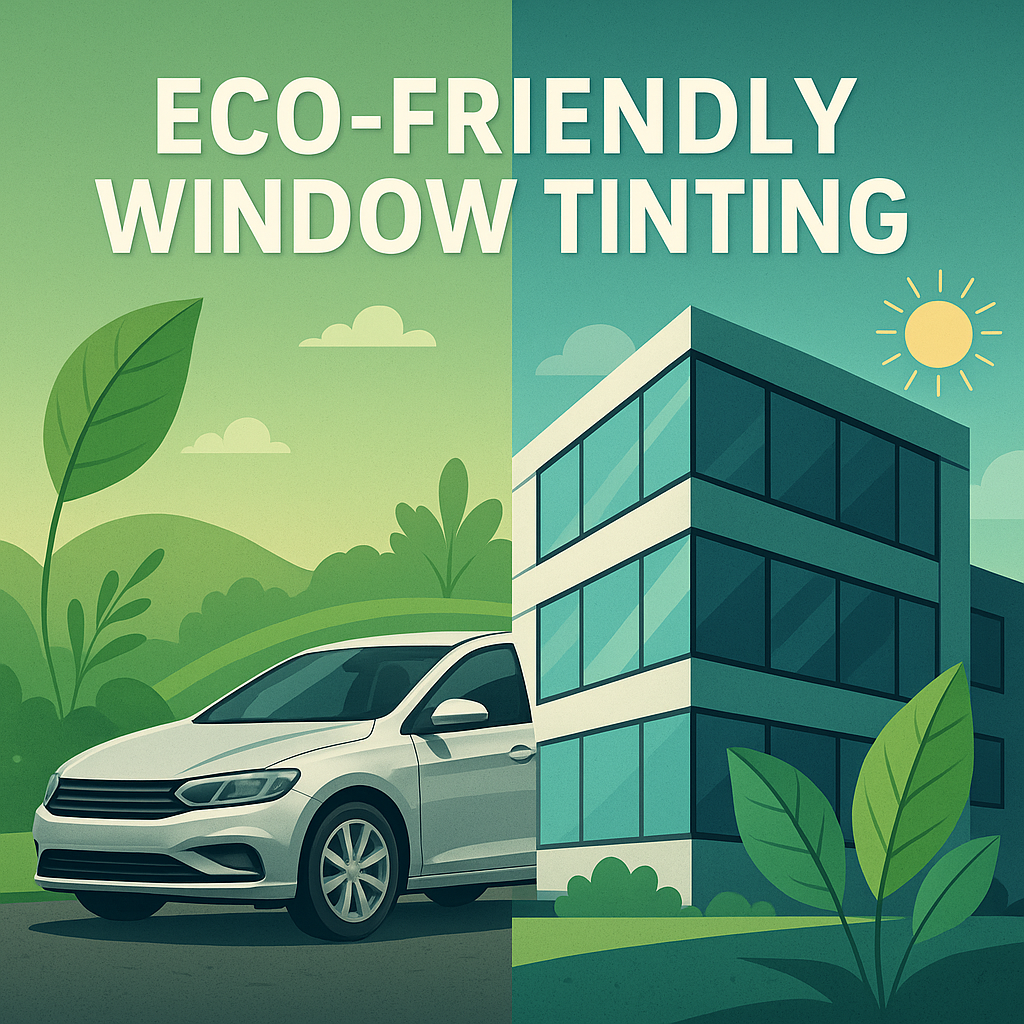
🚫 Myth 2: Window Tinting Harms Air Quality
Another common misconception is that tint films emit harmful chemicals into the air.
✅ Fact: Quality Tints Meet Strict Safety Standards
Reputable tinting films must comply with environmental and health standards. For example, low-emission films reduce harmful volatile organic compounds (VOCs). This ensures safe indoor air quality while still protecting against UV radiation.
(Check safety standards via Government of Canada – Indoor Air Quality
🚫 Myth 3: Window Tinting Is Only Cosmetic
Many think tinting is just about making cars or buildings look sleek.
✅ Fact: Tinting Reduces Energy Consumption
Tinted windows block heat and harmful UV rays. In vehicles, this means your air conditioning system works less, reducing fuel consumption. For homes and offices, tinted windows reduce cooling costs by up to 30%. Less energy use directly translates to a smaller carbon footprint.
(See data on energy efficiency from Natural Resources Canada – Energy Efficiency
🚫 Myth 4: Tinting Has No Environmental Benefits
The biggest myth is that tinting doesn’t positively impact the environment at all.
✅ Fact: Tinting Supports Sustainability
Here’s how the environmental impact of window tinting is beneficial:
Energy Savings: Less AC use means fewer greenhouse gas emissions.
UV Protection: Prolongs the life of interiors, reducing waste.
Durability: High-quality films last years, minimizing replacement waste.
Fuel Efficiency: Cooler interiors in cars reduce reliance on fuel for cooling.
🌍 Environmental Benefits of Window Tinting
1. Lower Energy Demand
Tinted windows in homes and vehicles help regulate temperature naturally, reducing reliance on cooling systems. This directly supports government energy efficiency goals.
2. Protecting Interiors and Reducing Waste
By blocking UV rays, tinting prevents fading and cracking of furniture, car seats, and dashboards. This extends product life and reduces landfill waste.
3. Reducing Greenhouse Gas Emissions
Every kilowatt-hour of electricity saved or litre of fuel conserved reduces harmful CO₂ emissions. Window tinting is a small but effective step toward sustainability.
4. Supporting Public Health
Tinting reduces UV exposure, lowering risks of skin cancer and eye strain. According to the Government of Canada – Sun Safety
🏡 Window Tinting Beyond Cars
While most people associate tinting with cars, the same environmental benefits apply to residential and commercial buildings.
Homes: Reduce energy bills and keep interiors cool naturally.
Offices: Improve comfort, lower operational costs, and support green building certifications.
Schools & Public Spaces: Provide healthier indoor environments while reducing electricity use.
Expert Insights: A5Tint’s Perspective
At A5Tint, we’ve worked with countless vehicle owners and property managers who once believed the myths about tinting. After installation, they often notice:
Lower utility bills.
Better comfort in summer.
Interiors staying new longer.
Our eco-friendly films are specifically designed to balance sustainability and performance, proving that the environmental impact of window tinting is overwhelmingly positive when done right.
Conclusion
The environmental impact of window tinting is often misunderstood. While myths suggest it’s wasteful or purely cosmetic, the facts show otherwise:
It reduces energy use.
It lowers greenhouse gas emissions.
It extends the life of interiors.
It supports healthier, more sustainable living.
By choosing professional installation and eco-friendly films, window tinting becomes a smart investment not only for comfort and aesthetics but also for the planet.
At A5Tint, we are proud to provide tinting solutions that protect both your investment and the environment.
